Why Managed IT Network Services Are Critical for Business Operations

Could your business thrive without reliable IT network services in Birmingham, AL? In today’s fast-paced business environment, a reliable IT network is more than just technology; it is the backbone supporting nearly every aspect of your operations. From handling customer transactions and employee communications to accessing cloud services and storing important data, businesses in Birmingham, AL, depend on robust network infrastructure to stay competitive and efficient.


In this article, we will explore why managed IT network services are critical for business operations, highlighting the key benefits of proactive management, security, and partnering with a trusted local provider.


Why Network Infrastructure Is Essential for Business Success


The network infrastructure in your organization connects all your digital devices and applications. Without a solid foundation, even simple tasks can be slowed down or interrupted. A well-maintained network enables smooth communication between employees, fast access to software applications, and efficient processing of customer information.


As businesses evolve and rely more on cloud computing and digital tools, their networks must handle increasing data loads without compromising speed or security. Proper network infrastructure also prepares your business to scale by supporting new technologies and users seamlessly. Ensuring that this infrastructure is stable and secure keeps operations running without costly disruptions.


The Hidden Risks of Unmanaged Networks: Downtime, Security Vulnerabilities, and Slow Systems


Many businesses underestimate the risks that unmanaged networks bring. Without expert oversight, unexpected network downtime can halt essential business functions, leading to lost revenue and dissatisfied customers. Downtime does not just affect sales; it can damage your professional reputation and lead to missed deadlines or opportunities.


Security risks are another serious concern. Cybercriminals actively target poorly managed networks to steal sensitive information or launch ransomware attacks. Without reliable cybersecurity measures in place, your business data and your customers’ information may be vulnerable.


Additionally, networks without regular maintenance often suffer from deteriorating performance. Slow systems frustrate users and can cause workflow bottlenecks that reduce overall productivity. Managed IT network services help identify these issues early and prevent them from negatively impacting your operations.


How Proactive Monitoring and Maintenance Enhance Network Stability


One of the most valuable features of business-managed IT services is proactive monitoring. This involves constant observation of your network’s health, allowing IT professionals to detect irregularities or potential problems before they escalate.


Proactive maintenance ensures that software patches are applied promptly, hardware performs optimally, and security updates protect against the latest threats. This ongoing attention to detail reduces the risk of unexpected failures, keeping your network available and fast.


By addressing issues early, your business avoids costly emergency repairs, extended downtime, and the risk of compromised data. The overall result is a more reliable network that supports your business objectives.

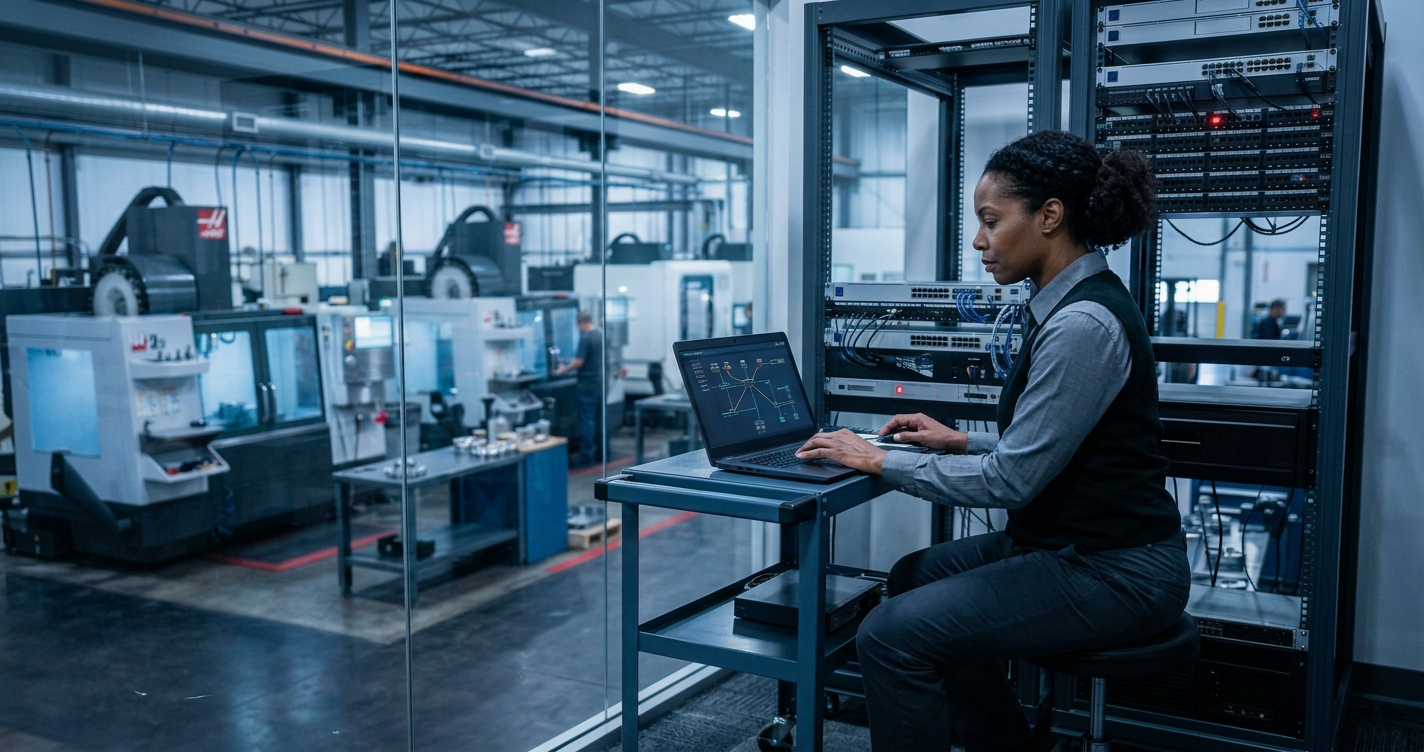
Server rack with network cables and connections.

Tailored Cybersecurity Protection and Data Safety


Security is an integral part of any managed IT network services strategy. Providers implement multiple layers of protection, from firewalls and antivirus programs to encryption and secure access protocols. These defenses help protect your business against cyberattacks and unauthorized access.


In addition to prevention, regular backups and disaster recovery plans are essential to safeguard your data. Should any incident occur, these measures allow for rapid recovery and minimize business impact.


Customized cybersecurity solutions not only improve protection but also help your business maintain compliance with industry regulations and build trust with customers.


The Advantages of Working With a Local Managed IT Provider in Birmingham, AL


Choosing a local managed IT network services provider offers distinct advantages. Local companies like AllTech IT Solutions are deeply familiar with the Birmingham business environment and can provide quick, personalized support.


When network issues arise, having a nearby provider reduces response times, whether via remote assistance or on-site visits, ensuring faster resolution and less disruption to your operations. Local providers also take the time to build long-term partnerships, offering tailored solutions that fit your unique business needs and goals.


This localized service approach creates a better customer experience and more dependable IT support.


Real Business Benefits of Business Managed IT Services in Birmingham, AL


Adopting business-managed IT services offers clear advantages that impact your bottom line positively:


  • Enhanced Efficiency: Optimized networks reduce delays and interruptions, allowing employees to work productively.
  • Stronger Data Protection: Proactive cybersecurity safeguards your critical information and maintains regulatory compliance.
  • Minimized IT Disruptions: Continuous monitoring and preventative maintenance reduce unexpected outages.
  • Scalable Growth Opportunities: Managed services help integrate new technologies and accommodate business expansion smoothly.


By partnering with AllTech IT Solutions, Birmingham businesses can unlock these benefits and build a resilient technology foundation.


Take the Next Step Toward Reliable IT With AllTech IT Solutions in Birmingham, AL


In this article, we have highlighted why managed IT network services are indispensable for protecting your network, improving reliability, and enhancing your company’s productivity. If your business is in Birmingham, AL, and you want to ensure your network runs smoothly and securely, consider working with AllTech IT Solutions.


To learn more about how managed services can support your business goals, contact AllTech IT Solutions at 205-290-0215 or visit the contact page. Investing in expert IT network management today helps your business avoid costly disruptions tomorrow and positions you for continued success.

By Sara Reichard June 2, 2026
Why Your IT Team's Retirement Might Be Your Biggest Security Problem You're not drowning. Your network is stable. Your team's reliable. And then your long-time IT director retires, and suddenly the math changes. It's 2 a.m., and you're thinking about expansion. Your company's been cash-rich and weathering storms that wiped out competitors. Revenue's coming back. The owner's asking: "What if we expand into 10 new markets in the next couple of years?" And your reply—honest, unfiltered—is: "I'm 67 years old. If we're adding 10 branches and I'll be 69, I'm not doing this in my seventies." That's not pessimism. That's clarity. And it's exactly where a lot of growing mid-market companies find themselves: stable today, but staring at a scaling problem they're not quite ready to name. Why "Stable and Secure" Isn't What It Seems You've earned it. Over the last four years, you've reduced costs by hundreds of thousands of dollars. You've hardened your security. You've built a tight team of people who actually care about their work. Your IT environment? Enterprise-grade. The problem isn't what you've built. It's what you're about to ask of it. Most mid-market leaders make the same calculation you're making: "If we expand quickly, can our IT infrastructure scale?" But they're asking the wrong question. The real question is: "Can our people scale?" Scaling isn't about better infrastructure. It's about bandwidth, expertise, and—most critically—whether the people running your systems want to scale with you. And if your IT manager just told you he's not working into his seventies managing growth you're still planning, that's not a personnel problem. That's a signal that you need a different model. You've survived what killed 7,500 competitors in four years. You did it with no debt, smart decisions, and a lean team. But that same leanness that saved you is now your constraint. The Questions Worth Asking Let's get specific about what you're actually facing. First: What parts of IT can you actually afford to stop doing in-house? You already know the answer intuitively. When we asked one IT director what they'd outsource if they brought on 10 new branches, his first thought was: "Hardware deployment—provisioning and shipping equipment to new offices. That's probably one or two people's worth of work." That's not a small thing. That's a real, chunked piece of IT you could move off your plate. But most companies never ask this question until they're already drowning. Second: Are you hiring for growth or hiring to survive? Your staffing business knows this better than most industries: finding talent is brutal, and keeping it is harder. You've got a younger tech on your team who's already becoming invaluable. He's bright, he's learning fast, and frankly—you're worried someone else is going to realize his value before you do. That's a real fear. So here's the tough part: if you're adding 10 branches, are you planning to hire 2–3 more IT people? Or are you going to burn out the team you have? Third: What was the ransomware attack five years ago really telling you? You got hit. They were inside for a month without anyone knowing. You restored from backup—and everyone said you were lucky. The part that stuck with you: if it happens again, you're not going back to backup. You're replacing every piece of hardware because you can't trust what's hiding inside the existing infrastructure. That's not paranoia. That's the new reality of security at scale. And that realization? It's your biggest protection. But it only works if your team has the bandwidth to act on it when something happens. If your IT director is managing 40 offices on a 3-person team and planning his retirement, what happens when the next threat comes? Fourth: Can you actually feel confident in your compliance story? Five years ago, ransomware was your industry's problem. Now insurance companies are asking questions. They want proof—not policies, but evidence—that you're actually doing what you say you're doing on security. That's a new burden. And it's one that grows with every new office you add. Why This Changes Everything Here's where most companies get it wrong: they think scaling IT means buying better tools or hiring cheaper people. It doesn't. It means building a model where your team isn't the single point of failure. Think about what you actually need. You've got a 3-person team managing 36 offices across 9 states right now. That works because the work is distributed (remote ticket support, email, cloud backups). But it only works because your people are good and they're present. The moment your IT director steps back, the moment you add 10 new locations, or the moment one of your rising stars gets a better offer elsewhere—that model breaks. Here's what actually changes things: a co-managed model. This doesn't mean replacing your team. It means partnering with a provider like AllTech IT Solutions who can absorb specific pieces—helpdesk, hardware deployment, 24/7 security monitoring, 24/7 response—while your internal team keeps ownership of strategy, relationship-building, and the stuff that requires industry knowledge. Your team stays. Your culture stays. But the scaling problem? That's shared. In practice, this looks like: your company handles new office relationships and strategic decisions. AllTech handles the provision-and-ship logistics for hardware, manages continuous security monitoring across all 40+ offices (now including the 10 you're adding), and provides support so your 67-year-old IT manager isn't the only person on call when something breaks at 2 a.m. The beauty of this model is it's built around your constraints, not around forcing you to choose between "hire people we can't find" or "run your team ragged." What This Actually Looks Like Let's put this in concrete terms, because the theory only matters if it works. Scenario 1: Hardware Expansion (Your First Outsource Target) You're adding 10 new branch offices. Each one needs 5–10 computers, a router, switches, printers, phones. Your current approach: order the equipment, your team assembles it, tests it, configures it, ships it, deploys it remotely. That's 100+ devices, hundreds of hours of your team's time. With a co-managed approach: you order the equipment, ship it directly to your provider, they provision everything (install the OS, pre-configure security, load your line-of-business software remotely), and drop-ship it to each new location. Your team does the local walkthrough and relationship-building when needed. You saved yourself 1–2 people's worth of work, and you've got a professional deployment that's consistent across all locations. As you grow to 50 offices, that savings compounds. Scenario 2: Security Monitoring During Uncertainty Five years ago, ransomware attackers were inside your network for a month before anyone noticed. That can't happen again—you've already thought about that. But here's the new problem: you've got 36 offices now, heading toward 46. Your IT team is managing patches, backups, and user support. Who's watching for the next breach while they're doing their day jobs? This is where continuous monitoring matters. Real-time threat detection. When someone tries to log in from an impossible location, systems lock automatically and alert in real-time. When a user downloads suspicious files, it's caught before it spreads. When a new vulnerability drops for something you use, it's identified and flagged before hackers weaponize it. This runs 24/7, independently of whether your team has bandwidth that day. AllTech has a security operations center doing exactly this for dozens of companies—one of them was a law firm that got hit badly because someone kept re-opening a malicious file their antivirus kept blocking. On the fourth try, it got through. With real-time monitoring, that's caught and locked down before attempt two. Scenario 3: Succession Planning Without Turnover You hired a bright tech three years ago—entry-level, but incredibly sharp. You've trained him up, and now he's running full speed. But you know something: finding another person with his potential is hard. Keeping him? Harder. He's not on pharmaceutical or finance salaries. He's on staffing-industry salaries. So your real risk isn't that you'll lose him to poaching—it's that you'll burn him out if you force him to scale the entire infrastructure while you're adding 10 offices and your IT manager retires. With a co-managed partner handling provisioning, monitoring, and response, your internal team is freed up to focus on what they're actually good at and what actually matters: relationships, strategy, and staying fresh. Your rising star stays engaged. You keep the talent you've worked hard to build. Now the Question Becomes... You're not looking to abandon your IT team. You're not looking to cut corners on security. You're looking to build a scaling model that doesn't depend on your IT manager working into his seventies, and that doesn't ask you to choose between going without security and drowning in cost. The companies that got this right—they didn't replace their teams. They strengthened them by handling the scaling pieces that drain time but don't require industry knowledge. Here's what's worth asking: If you expand into those 10 new markets, which part of IT would be easiest to move off your internal plate? Not your whole department—just the piece that's pure logistics, or the piece that requires 24/7 watching and doesn't need your people's specific expertise. What would it look like to keep your culture, keep your team engaged, and actually grow without the burnout? That's the conversation that matters. And you don't need to have it until you're ready—but you should start thinking about it now, before you're in crisis mode trying to figure it out. If you want to explore what a co-managed IT partnership looks like for a distributed, growing organization like yours, AllTech IT Solutions works with mid-market companies navigating exactly this transition. You can start a conversation at https://alltechsupport.com , no pressure, no commitment. Just a peer conversation about what's possible. The companies that thrive through growth don't do it alone. They build partnerships where the pieces fit together. Your job is strategy and culture. Partner's job is scaling. Everyone stays engaged. That's worth thinking about. 
May 27, 2026
Why Your Accounting Firm's IT Infrastructure Isn't Just a Technical Problem—It's a Business Lifeline The Real Cost of "We'll Do Better" Tax season waits for no one. Neither do cybercriminals. That's the reality facing accounting firms today. You're managing sensitive financial data, client information, and compliance obligations—while operating infrastructure that may be one breach away from disaster. Yet many firms find themselves trapped in a cycle: their current IT provider promises improvements, quarter after quarter, but nothing fundamentally changes. Sound familiar? Three Vulnerabilities That Keep You Up at Night 1. The Backup That Doesn't Exist When You Need It Backups are supposed to be your safety net. But a backup that fails silently is worse than no backup at all—because you don't know you're exposed until it's too late. When we assess accounting firms, we consistently find backup systems that haven't been tested in months. No restoration practice. No disaster recovery plan. Just hope. 2. The Old Hardware Ticking Time Bomb Servers beyond five years old aren't just aging—they're becoming liability. Parts become unavailable. Warranties expire. And when failure happens during tax season, you're not calling Dell. You're searching eBay for replacement components and praying they work. 3. The Compliance Gap Nobody's Talking About HIPAA. GDPR. FINRA. PCI. Each regulation has specific requirements—and many require 100% compliance, not 99%. You could be meeting 19 out of 20 requirements and still be technically non-compliant. That one missing item? It's the one the auditor finds. Or worse—the one a cybercriminal exploits. Why Accountants Are the #1 Target Here's what cybercriminals know: accounting firms have access to money, client data, and predictable workflows. They don't need to break into your system dramatically. They just need to: Watch your email for payment instructions and client data transfers Intercept wire transfer requests by impersonating leadership Deploy ransomware during your busiest season when downtime costs the most Compromise your clients through your systems, making it your liability One firm we worked with experienced a ransomware attack that started with an employee reconnecting an infected old laptop. It spread to three machines before monitoring stopped it. The result? Incident response. Notifications. Regulatory scrutiny. A breach that could have been prevented. The Partnership Approach That Actually Works Here's what separates a true IT partner from a vendor: Understanding Your Business Rhythm : Your IT infrastructure shouldn't be a generic setup. It should reflect the reality of tax season—when you need everything stable, secure, and running flawlessly. That means proactive maintenance in January. Quarterly checkups. Hardware refreshes on a schedule, not a crisis. Risk Aversion Built Into Every Decision : You're risk-averse for good reason. Your clients depend on you. A system outage doesn't just cost you money—it costs them. A data breach damages trust that takes years to rebuild. A true partner approaches IT with the same mentality: prevent problems, not just fix them. Compliance as a Roadmap, Not a Checkbox : Your risk assessment should give you a clear picture: Where are you compliant? Where are you vulnerable? What's the priority order to fix gaps? And critically—which compliance requirements actually apply to your specific business? (Not every regulation is equally relevant to every firm.) Treating You Like Family, Not a Ticket Number : When you become a customer, you're no longer a support case. You become someone they're invested in protecting. That means they know your team. They understand your processes. They're proactive about calling you with concerns instead of waiting for things to break. The Questions to Ask Your Current Provider When was your backup last tested and restored to a clean environment? What's your timeline for replacing servers over five years old? Can you show me a compliance assessment with specific gaps and remediation steps? How do you prevent business email compromise attacks? What's your incident response plan if we get breached? If they can't answer these clearly—or if they're giving you the same vague promises they gave you last year—it's time to look elsewhere. Your Next Step The difference between accounting firms that sleep well at night and those who worry about the next disaster often comes down to one decision: choosing a true partner over a service provider. If you're ready to move from crossed fingers to actual security, let's talk about what a proactive, risk-aware IT partnership looks like for your firm. Your clients deserve better. So do you.
May 20, 2026
AllTech IT Solutions has been recognized on the 2026 INC. Regionals list of Fastest Growing U.S. Companies for delivering trusted IT support, cybersecurity, and business technology solutions.
May 15, 2026
When Your MSP Becomes Your Biggest Risk: What Happens When Service Failures Cost You Peak Revenue
“2026 Municipal IT Crisis” cybersecurity graphic with shield, city skyline, data icons, and rising arrows
April 28, 2026
AllTech IT Solutions helps municipalities overcome 2026 IT challenges with reliable support, security, and expert guidance. Call 205-290-0215 today!
By Sara Reichard April 9, 2026
AllTech IT Solutions explains how healthcare practices can safely use AI tools under HIPAA, BAA, and compliance rules. Call 205-290-0215 for compliant IT guidance today!
Infographic of cybersecurity tools, shields, devices, charts, and connected network icons in blue and green.
By Sara Reichard March 13, 2026
AllTech IT Solutions explains growing cybersecurity and compliance risks facing Alabama healthcare in 2026 and how to stay protected. Call 205-290-0215 for expert support today!
DHS biometric search dashboard on monitors, showing facial, iris, palm, and fingerprint scanning graphics.
March 3, 2026
AllTech IT Solutions explains how the new DHS biometric search system impacts SMB cybersecurity, compliance, and identity risk exposure. Call 205-290-0215 today!
A woman holding a laptop working in a dark server room.
February 20, 2026
AllTech IT Solutions explains how proactive IT support helps prevent downtime, improve security, and keep business systems running efficiently. Call 205-290-0215 today!
Laptop with glowing data dashboard in a dark office, with three blurred colleagues in conversation behind it
By Sara Reichard January 16, 2026
AllTech IT Solutions explores how AI chatbots are transforming workplace efficiency while addressing security & compliance concerns. Call 205-290-0215 for expert IT guidance!